Burglary of a Vehicle Defense

1 / 5


Burglary of a Vehicle Defense
Starting at $5,000
Hourly beyond scoped fee: $250
Free 30-minute consultation
Schedule Your Free Consultation
Burglary of a vehicle is a Class A misdemeanor in Texas on a first offense and a state jail felony on a second or subsequent conviction, under Section 30.04 of the Penal Code,1 which makes the first case the one that defines the trajectory. The contested issue is usually intent, because the State must prove not just an entry but the purpose behind it. Forrest Good PLLC represents people charged with burglary of a vehicle in Bexar County and the surrounding counties, from the filing of the case through final disposition in the trial court.
What a burglary of a vehicle charge is
Texas Penal Code Section 30.04 makes it an offense to break into or enter a vehicle, or any part of a vehicle, with intent to commit a felony or theft.1 The base offense is a Class A misdemeanor, punishable by up to one year in the Bexar County Adult Detention Center and a fine of up to $4,000.2
The statute has two elements that do separate work. The first is the entry, breaking into or entering the vehicle or a part of it. The second is the intent, the purpose to commit a felony or theft at the moment of entry. The entry alone is not the offense; the State must prove both, and the intent element is where most of these cases are actually contested.1
The forms a burglary of a vehicle charge can take
Burglary of a vehicle is graded primarily by the person's history, with a separate set of enhancements for certain vehicles. The base case and the elevated cases are meaningfully different in exposure.
The first-offense Class A misdemeanor
On a first offense, burglary of a vehicle is a Class A misdemeanor, filed in a Bexar County Court at Law and carrying up to one year in jail and a fine of up to $4,000.1 This is the rung that defines the trajectory, because the next conviction is charged at a higher grade.
When prior convictions raise the level
Section 30.04 elevates the offense to a state jail felony on a second or subsequent conviction for burglary of a vehicle.1 A case that is a misdemeanor on its face becomes a felony on the strength of the record alone, which moves it from county court to district court and is why the disposition of the first case carries so much weight.
When the vehicle itself raises the level
The statute sets higher grades for specified circumstances involving commercial vehicles, rail cars, and certain controlled-substance contexts. Where the accusation involves one of those circumstances, the grade is read directly off the charging instrument and confirmed against the statute, because it changes the exposure range.
Who a burglary of a vehicle charge reaches
Most people charged with burglary of a vehicle have never been in a criminal courtroom before. Many cases present as parking-lot incidents: a car alarm, a pried-open window, a witness who says they saw someone reach inside. The people charged are often young, often nearby when something else happened, and often charged on an inference about why they were near a vehicle at all.
The collateral exposure tracks the grade. A first-offense misdemeanor still appears on the background checks that employers and landlords run, and a second conviction carries felony consequences that reach the right to vote and to possess a firearm. Because the second case is charged as a felony, the resolution of the first one shapes everything that can follow.1
What is actually at stake
The one-year ceiling and the $4,000 fine in Section 12.21 are the criminal side of the first-offense exposure.2 The larger stake is the trajectory: a second or subsequent conviction is a state jail felony, so a misdemeanor disposition that avoids a conviction protects against the felony grade that a later case would otherwise carry.1
There can be a civil side as well, where property was taken or a vehicle was damaged, and restitution may be negotiated within the criminal case. For a first offense, the county's misdemeanor pretrial diversion program and, where a person is eligible, deferred adjudication under Article 42A.102 are routes that can keep a conviction off the record.3 Whether either path fits a given case is a fact-specific question answered from the record, not a promise.
What to know if you have been charged
A burglary of a vehicle case is built out of the scene, the video, and the witness account, and what a person does in the first days affects all of them. The most common mistake is explaining the situation to an officer at the scene without a lawyer present. Those statements are written down and used, and Texas law governs when an accused's statement is admissible and what warnings had to come first.4
A few steps help in nearly every case. Write down what happened while it is fresh, including where the person was and why. Preserve any messages, receipts, or location data that place the person somewhere else or explain the presence near the vehicle. Hold on to all paperwork from the arrest or citation. And do not contact the complainant, which can add a charge rather than resolve one.
This is general information about how these cases work in Texas. It is not legal advice about any specific case, and reading it does not create an attorney-client relationship.
How a burglary of a vehicle case moves through the courts
A first-offense burglary of a vehicle in Bexar County follows a misdemeanor path. Knowing the order of events makes the process less frightening and the decision points easier to see.
Arrest or citation and magistration
The case can begin with an arrest or with a citation to appear. Where there is an arrest, the person is brought before a magistrate who gives the statutory warnings and sets bond, ordinarily within 48 hours, under Article 15.17.5
Filing in a County Court at Law
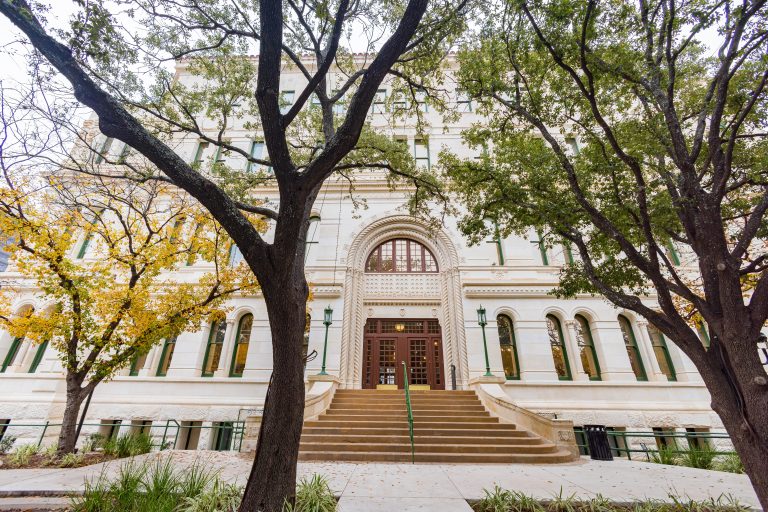
The Bexar County Criminal District Attorney files a first-offense charge into one of the Bexar County Courts at Law, which have jurisdiction over Class A and B misdemeanors.6 Filings move through the Cadena-Reeves Justice Center on Dolorosa Street,7 and the case is prosecuted from the Paul Elizondo Tower across the plaza.8
Pretrial settings and discovery
The case proceeds through a series of pretrial settings. The State's evidence, the offense report, any surveillance video, and the witness statements, is produced under the discovery statute, Article 39.14.9
Resolution
A first-offense case can resolve by dismissal, through the county's misdemeanor pretrial diversion program, by deferred adjudication where a person is eligible under Article 42A.102,3 or at trial. Which routes are realistic depends on the record.
The deadlines that matter
Burglary of a vehicle cases do not carry a fast administrative clock, but timing decides what evidence survives and what options remain.
- As early as possible to preserve surveillance video from nearby businesses, parking-lot cameras, and home-security systems, which run on retention schedules and are routinely overwritten if they are not requested in time.
- While the scene is fresh, to document the alleged point of entry, because photographs of a pried doorframe, a broken window, or an unlocked door can be read very differently and degrade over time.
- Throughout the case, the State carries a continuing duty to disclose evidence under Article 39.14; that duty is enforced by motion, not assumed.9
- Two years is the limitations period for a misdemeanor, the window in which the State must file the charge.10
How Forrest Good PLLC approaches a burglary of a vehicle charge
Burglary of a vehicle cases turn on three pieces of evidence: the physical scene, the surveillance video where one exists, and the witness account. Forrest Good PLLC starts with the scene. Photographs of the alleged point of entry are read for what they actually show, because a pried doorframe and bent window molding tell a different story than a door that swung open on its own, and glass fragments outside the vehicle tell a different story than fragments inside.
Surveillance video from nearby businesses, parking-lot cameras, and home-security systems pointed at the street is requested through formal discovery under Article 39.14 and through investigative subpoenas where the facts support it.9 Witness statements are read for what the witness actually saw versus what the witness inferred, because the difference between seeing someone reach into a vehicle and seeing someone walk past one is often the entire case. The intent element under Section 30.04 is litigated through the absence of any taken property, the person's stated explanation at the scene, and the totality of the surrounding circumstances.1 Any statement given at the scene is examined against the warnings that had to precede it, and pretrial diversion eligibility is analyzed against the Bexar County misdemeanor program's published criteria.
How time and fees work
The hour estimate
Forrest Good PLLC estimates this matter at 12 to 22 hours of attorney time, billed at $250 per hour. The lower end reflects a case that resolves early with a routine result; the upper end reflects a large volume of surveillance video, multiple witnesses to interview, suppression motion practice where the encounter began with a stop, and extended pretrial settings. The pricing methodology explains how the charging instrument, the evidence load, and the procedural stakes drive the estimate.
The flat fee and what it covers
The starting flat fee is $5,000. It covers review of the offense report and the scene evidence; surveillance video review and witness investigation; every pretrial setting in the County Court at Law; full pretrial motion practice including discovery enforcement under Article 39.14 and any suppression motion the facts support;9 and pretrial diversion screening. The fee shown here is honored while this page is published, consistent with Texas Disciplinary Rule of Professional Conduct 7.02(d).11
What is billed separately
- Court filing fees and court costs imposed at sentencing
- Restitution paid to the complainant, negotiated separately
- An investigator for extended witness or scene work, where one is needed, quoted separately
- A jury trial setting, priced separately starting at $15,000 for a misdemeanor
- An appeal to the Court of Appeals, quoted separately based on the length of the record
Any work outside the scoped fee is billed at $250 per hour and is disclosed in the written engagement letter before it begins. The engagement letter is the binding contract for the matter.
Starting with a free consultation
The first step is a conversation. The initial 30-minute consultation with Forrest Good PLLC is free and is scheduled through the office's Google Booking page. It is the time to walk through the charging instrument, the offense report, and any photographs of the scene, and to map out where the intent element and the available video stand before any setting. Bringing those documents makes the half hour far more useful.
No attorney-client relationship is formed until a written engagement letter is signed; the consultation itself carries no obligation.
Sources
- 1. Tex. Penal Code § 30.04 (West 2025) (burglary of a vehicle is a Class A misdemeanor, raised to a state jail felony on two or more prior convictions).
- 2. Tex. Penal Code § 12.21 (West 2025) (Class A misdemeanor punishment: up to one year in jail, fine up to $4,000).
- 3. Tex. Code Crim. Proc. art. 42A.102 (West 2025) (deferred adjudication eligibility).
- 4. Tex. Code Crim. Proc. art. 38.22 (West 2025) (admissibility of an accused's written or oral statement, and the warnings the statement must satisfy).
- 5. Tex. Code Crim. Proc. art. 15.17 (West 2025) (duties of arresting officer and magistrate; bond at first appearance).
- 6. Tex. Gov't Code § 25.0172 (West 2025) (Bexar County Courts at Law; jurisdiction over Class A and B misdemeanors).
- 7. Bexar County District Clerk, Cadena-Reeves Justice Center, 300 Dolorosa St., San Antonio, TX 78205.
- 8. Bexar County Criminal District Attorney's Office, Paul Elizondo Tower, 101 W. Nueva St., San Antonio, TX 78205.
- 9. Tex. Code Crim. Proc. art. 39.14 (West 2025) (discovery in criminal cases; Michael Morton Act).
- 10. Tex. Code Crim. Proc. art. 12.02 (West 2025) (two-year limitations period for misdemeanors).
- 11. Tex. Disciplinary Rules Prof'l Conduct R. 7.02(d) (Tex. Sup. Ct.) (advertised fees binding while published).
Pricing current as of May 2026. Forrest Good PLLC honors the starting fees shown on this page while they are published. The initial 30-minute consultation is complimentary. No attorney-client relationship is formed until a written engagement letter signed by Forrest Good PLLC and the client is in place.